
A P2 mask is one of the first PPE items technicians reach for when dust, fibres or airborne particles are part of the job. Call it a dust mask, a respirator mask or a P2 respirator — what matters on an Australian site is whether the respirator is the right class for the exposure, whether it seals, and whether the crew will actually wear it for the full task.
This is a buying and use guide for restoration, mould, construction clean-up and site work in Australia. It covers what a P2 mask is for, how it differs from a basic dust mask or an N95 search result, what to check before you restock the van, and how to wear disposable respirators without creating the next contamination path.
It is not a hazard assessment and it is not a substitute for the site procedure, fit-check method, SDS or the compliance documentation that comes with the stock you buy. Match the respirator to the exposure, treat disposable stock as single-use when that is the job, and pair respiratory protection with containment and the rest of the PPE system.
What a P2 mask actually is
A P2 mask is a particulate respirator. In Australia and New Zealand, P2 is the filter class used for many trade jobs involving dust and airborne particles. In plain language: it is a respirator mask built to filter particulates, not a loose cloth covering and not a chemical gas mask.
Trade language mixes several names for the same aisle. You will hear P2 mask, dust mask, respirator mask, P2 respirator and “N95 mask Australia” used loosely. N95 is a US NIOSH class that often appears in Australian search results. P2 is the AS/NZS filter class commonly specified for local workplace stock. Buy by the Australian standard and the listing documentation — not by the nickname on a Google result.
Disposable cup-style P2 respirators with an exhalation valve are common van stock for restoration and site work. The valve makes exhalation easier and helps manage heat and moisture during longer wear. It does not turn a particulate respirator into protection against every vapour, gas or oil-based aerosol on the SDS. Read the exposure, then pick the respirator.
When a P2 mask earns its keep on restoration work
Restoration is not only extraction and drying. Strip-out, sanding, bagging and clean-up put technicians into rooms that still hold dust and airborne particles.
Water damage restoration. Tear-out and Category work generate dust once materials dry and get cut. A disposable P2 particulate respirator is a practical default when your site procedure calls for respiratory protection.
Mould remediation and cleaning. Spore and fibre control is a systems job — containment, negative air, PPE and disposal. A P2 respirator sits with gloves and coveralls inside the work zone. Pair it with proper dust containment so the mask is not fighting an open doorway.
Sanding, grinding and demolition dust. Cutting plaster, timber, render or debris throws particulate into the breathing zone. That is classic P2 territory when the hazard is dust and non-oil based aerosols rather than a chemical vapour.
Painting and spray preparation. Dust from prep and sanding is a particulate job. Confirm the listing and the paint SDS before you assume a disposable P2 covers every coating vapour — particulate filtration and organic vapour protection are not the same thing.
Construction clean-up and general site work. Anywhere fine dust and airborne particles are part of the day, a certified disposable P2 is the usual respirator class technicians stock in the van.
What a P2 mask is not. It is not a substitute for fit checking. It is not automatic protection against gases, vapours or oil-based aerosols unless the listing and the standard say so. It is not a reason to skip containment, gloves or clothing barriers.
P2 vs dust mask vs “N95 mask Australia
A basic dust mask with no P2 marking. Fine for coarse nuisance dust on a DIY job. Poor as a default for restoration or regulated site work. If the listing does not state P2 (and the AS/NZS documentation for the stock in the carton), treat the protection level as unknown.
A P2 particulate respirator. The trade class for many Australian jobs involving dust, airborne particles and non-oil based aerosols. Look for AS/NZS 1716 documentation on workplace stock, a design that can seal, and features that keep the crew wearing it — valve, nose foam, adjustable clip.
“N95 mask Australia” as a search term. Many buyers type N95 when they mean a particulate respirator for AU site work. N95 is a US classification. Local stock is commonly labelled to AS/NZS 1716 as P2. If your client, hygienist or WHS procedure names a class, buy that class — then confirm what arrived in the carton.
If you only stock one thin “dust mask for everything,” you will either over-protect on clean work or under-protect on a dirty room. Stock a certified disposable P2 for particulate jobs.
What to look for when you buy a P2 mask
Ignore lifestyle packaging. Check the respirator for the job you actually run.
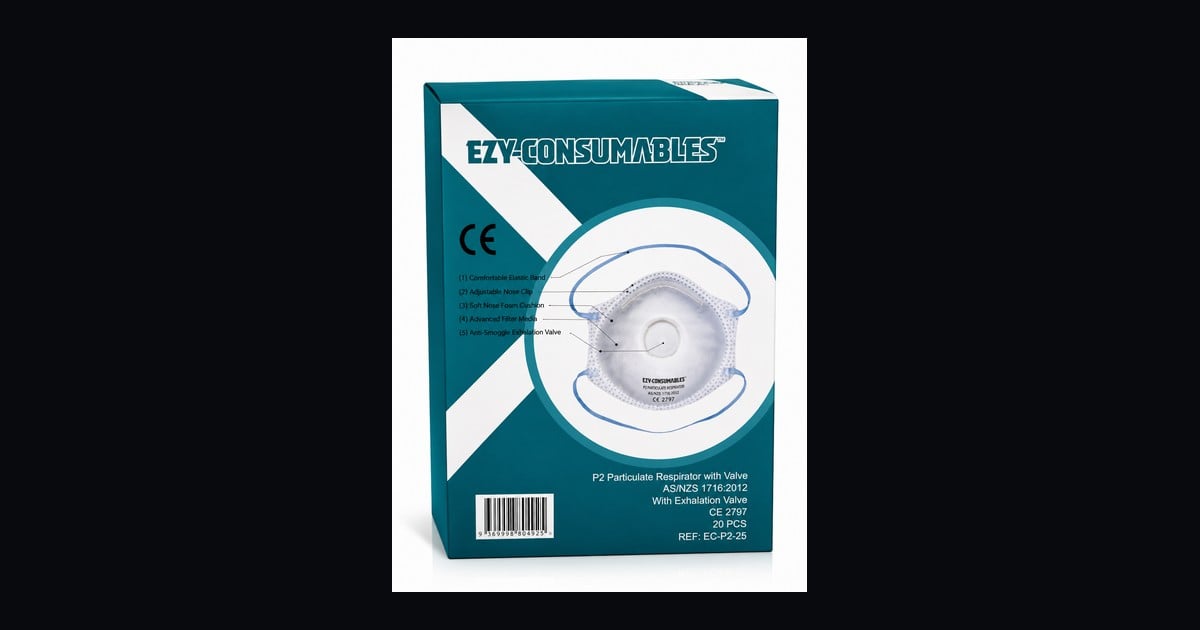
Filter class on the listing. Look for P2 particulate respirator language you can verify. The Ezy Consumables P2 Particulate Respirator with Valve stocked at Restoration Warehouse is listed as a disposable P2 particulate respirator for dust, airborne particles and non-oil based aerosols.
AS/NZS 1716:2012 on the stock. Manufactured to AS/NZS 1716:2012 is the standard called out on the Ezy Consumables listing. Confirm the carton and product marking match what your procedure requires. Do not invent a certificate number from a blog post.
Exhalation valve. An integrated valve helps reduce heat and moisture build-up and is listed for easier breathing during extended wear. Confirm valve presence on the SKU you order — valved and unvalved stock are different products.
Fit features. Adjustable (mouldable) nose clip, soft nose foam cushion and elastic head straps decide whether the mask seals or leaks around the bridge of the nose.
Low breathing resistance and lightweight disposable design. Crews abandon heavy, hard-to-breathe stock halfway through a bag-out. Comfort features matter when the alternative is an open face in a dusty room.
Pack format. A 20-pack is practical van and depot restock. Confirm pack size on the product page before you order.
Listed applications. The Ezy Consumables listing calls out restoration, construction, demolition, sanding, painting and industrial applications, plus water damage restoration, mould remediation, painting, agriculture, mining and construction. Match those to your scope.
Options at Restoration Warehouse
Restoration Warehouse stocks disposable P2 respirators under PPE and safety. Confirm current pack details on the product page.
Ezy Consumables P2 Particulate Respirator with Valve 20 Pack. Ezy Consumables P2 Particulate Respirator with Valve 20 Pack (SKU EZY-CON-PPE-P2, model EC-P2-25). Listed as a disposable P2 particulate respirator with exhalation valve for dust, airborne particles and non-oil based aerosols. Features on the listing include adjustable nose clip, soft nose foam cushion, low breathing resistance, elastic head straps, lightweight cup-style design and an integrated exhalation valve. Manufactured to AS/NZS 1716:2012; CE 2797 certified on the listing. Pack size: 20 masks. Colour: white. Box contents: 20 × Ezy Consumables P2 respirators with valve. Confirm availability on the page. Confirm supplied stock includes applicable AS/NZS documentation before workplace use.
Hand PPE to wear with the respirator. A P2 mask protects the breathing zone; it does not replace gloves. Pair respiratory PPE with nitrile gloves as the usual hand barrier on restoration and carpet work.
Containment so the mask is not doing the whole job. Respiratory PPE works better when the room is controlled. See how to choose dust containment for restoration and site work for ZipWall-style isolation that keeps dust in the work zone.
Browse the PPE & Safety category for what is currently stocked. Do not assume a price, a filtration percentage or a feature that is not on the listing.
How to use a disposable P2 mask on site
Fit check every time. Seat the cup. Adjust the nose clip. Position the elastic straps so the mask sits firm without gaps. Do a user seal check as your site procedure requires before you enter the dirty zone. Facial hair at the seal line is a leak path — plan the crew for that.
Put the respirator on before you enter the zone. Same rule as coveralls and gloves: dress for the dirty room before you cross the doorway. Do not hang a used mask around your neck and then walk into a clean kitchen.
Change when compromised. Moisture soak, a crushed cup, a broken strap, a clogged valve or a move from dirty to clean is a change-out. Disposable means disposable when contamination control is the point.
Dispose with the job. Contaminated respirators from mould, fire strip-out or fibre work are not general skip waste. Bag them with the affected waste stream the scope requires.
Stock the van by the pack. A 20-pack is easier to manage than three singles bought between jobs. Keep clean stock sealed until use.
Do not treat the valve as a vapour solution. The exhalation valve improves comfort on particulate jobs. It does not automatically add gas or vapour cartridges. If the SDS names vapours or oil-based aerosols, get the respirator system your hygienist or WHS procedure specifies.
Stock P2 masks with the rest of the PPE kit
A P2 mask fails at the same moment you need particulate protection — a mould strip-out, dusty tear-out, sanding or demolition clean-up where street breathing should not leave the work zone. Treat certified disposable P2 respirators as van stock next to gloves, coveralls and containment.
Restoration Warehouse stocks the Ezy Consumables P2 Particulate Respirator with Valve 20 Pack for restoration and site work. Browse the P2 respirator listing or the PPE & Safety range.
For current availability, pack details or a site order, call 07 3568 4925, email sales@restorationwarehouse.com.au, or visit restorationwarehouse.com.au.
