

Efficient restoration equipment does more than make a job feel faster. It helps a crew remove water sooner, establish the right drying conditions, measure progress and make defensible decisions. The goal is not to rush the work. It is to remove avoidable delays while keeping the project controlled.
For professional water-damage work in Australia, the AS-IICRC S500 Standard for Professional Water Damage Restoration (2025) is an important industry reference. Its scope includes drying technology, equipment, instrumentation, inspections and structural restoration.
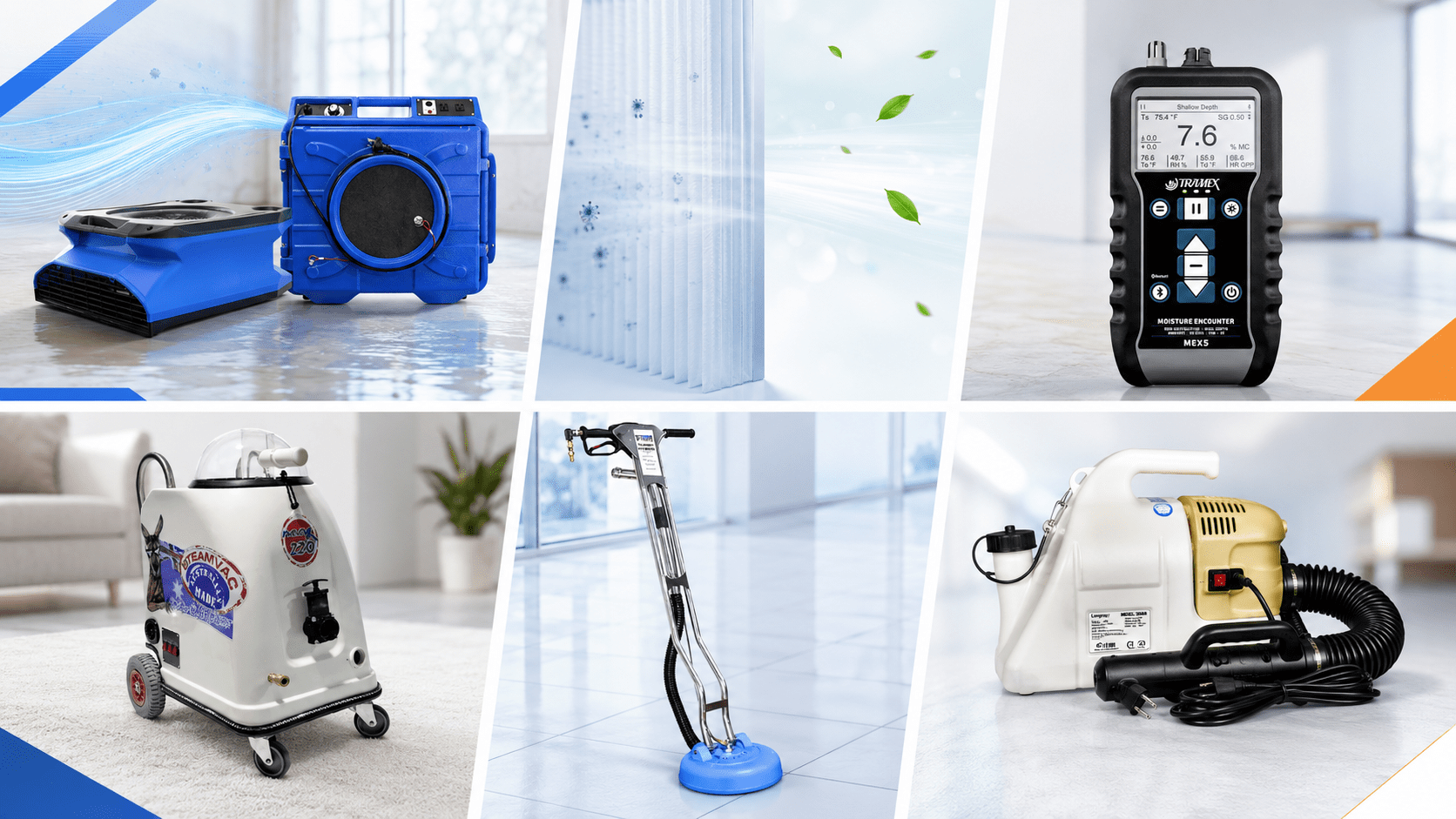
Start with the process, not the machine
A fast project begins with a clear sequence. Inspect the loss, identify hazards, stop the source where possible, extract recoverable water, establish drying conditions and monitor the result. A powerful machine cannot compensate for a missed moisture pocket or poor airflow.
Before selecting equipment, consider:
- the water source and affected materials;
- the size, layout and access restrictions of the site;
- electrical capacity and safe equipment placement;
- temperature, humidity and expected evaporation load;
- contamination, odour or airborne-particle controls; and
- the measurements needed to document progress.
1. Extraction removes the biggest load first
Removing liquid water is generally more efficient than asking dehumidifiers to process it as vapour. Suitable extractors, pumps, wands and floor tools can shorten the next stage significantly. Tool choice matters too. A good seal, useful recovery rate and practical hose setup help a technician work consistently across the affected area.
Explore our professional equipment range and hoses, fittings, tools and replacement parts when planning an extraction setup.
2. Air movement needs a purpose
Air movers support evaporation by replacing saturated air at a wet surface. More units are not automatically better. Direction, spacing, room geometry and material type affect the result. Poor placement can create dead zones or move unwanted particles beyond the work area.
Reassess the layout as materials dry or are removed. Equipment that was useful on day one may need to be moved on day two.
3. Dehumidification controls the drying environment
Dehumidifiers remove moisture from the air so evaporation can continue. Capacity should be matched to the expected moisture load and site conditions. Closed or controlled drying areas often perform better than spaces that continually receive humid outdoor air, provided ventilation and safety requirements are addressed.
Check condensate drainage, filters, operating temperature and power supply during every visit. A disconnected drain hose or blocked filter can quietly cost a full day.
4. Filtration and containment protect the work zone
Air filtration devices and containment materials can be essential where dust, mould or other particles may be disturbed. Source control and isolation should be considered before relying on personal protective equipment alone. The correct approach depends on the hazard and the work being performed.
Our supplies and safety range includes PPE, containment materials, bags, tapes and site-protection products. Always follow the equipment manufacturer’s instructions and the site-specific risk assessment.
5. Monitoring prevents guesswork
A room can feel dry while moisture remains inside plasterboard, timber, flooring systems or cavities. Moisture meters, thermo-hygrometers, thermal imaging and regular recorded readings help a restorer confirm whether conditions are improving.
Use the same measurement locations and suitable meter settings where possible. Record ambient conditions, material readings, equipment changes and any access limitations. Better records support better decisions and clearer communication with the customer.
Simple ways to reduce equipment downtime
- Clean filters, tanks, coils and tools after use.
- Inspect leads, plugs, hoses and couplings before dispatch.
- Label equipment so every unit can be tracked.
- Carry common consumables and failure-prone spare parts.
- Confirm power and access requirements before arrival.
- Use equipment that your team knows how to set up and monitor.
Buy, hire or ask for help
Ownership makes sense for equipment used frequently. Hire can be useful for peak demand, specialised tasks or a large one-off loss. Either way, serviceability and technical support affect the real cost of the machine.
If you are building a drying package or matching equipment to a particular workflow, contact Restoration Warehouse. We can help you compare practical options, check accessories and plan for ongoing parts and service.
This article provides general information only. Restoration work should be planned by a competent person using the applicable standards, manufacturer instructions and workplace health and safety requirements.
