
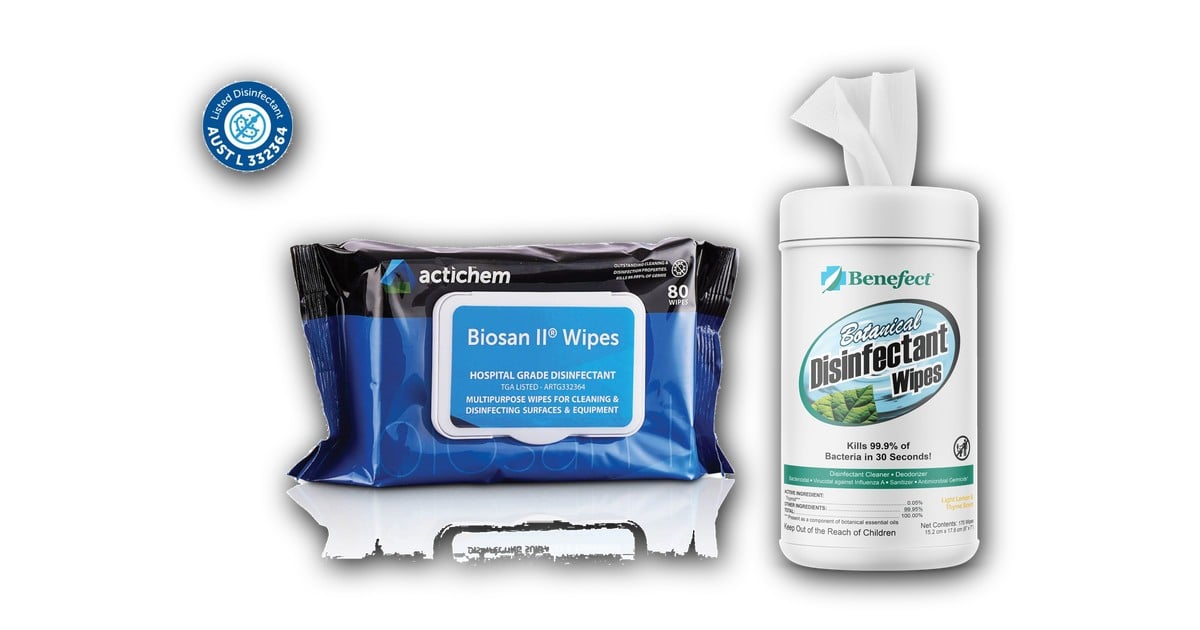
Hospital grade wipes are a format choice: ready disinfectant wipes for touchpoints and controlled surfaces when a concentrate bucket is impractical. They are not automatically the same scope as hospital-grade disinfectant concentrates — read the label and ARTG story on each product.
This guide is for Australian restoration and cleaning crews who need wipe-format disinfection on site. Soft links are to in-stock wipe products at Restoration Warehouse. Differentiated from concentrate guides: this post is wipes only.
When wipes beat buckets
Wipes suit door hardware, switches, contents touchpoints, vehicle cabs and staged cleans where carrying dirty solution is the risk. Concentrates still win for large surface areas and flood washes. Do not stretch a wipe past its wetness — a dry wipe is just a dirty cloth.
Wipe products stocked at RW
Actichem Biosan II Wipes – Innovative Hospital Grade… Actichem BioSan II hospital-grade disinfectant wipes for convenient professional surface decontamination. Biosan II wipes bring Actichem’s hospital-grade wipe format for programmes that already trust that chemistry family — follow the wipe label for contact time and surface suitability.
Benefect Botanical Disinfectant Wipes 250 Count Plant-based disinfectant wipes that clean and kill 99.99 percent of germs in one step, ideal for restoration, PPE and high touch surfaces. Benefect botanical disinfectant wipes suit crews that specify Benefect’s botanical line in a wipe format for listed organisms and surfaces on that label.
Contact time and surface limits
Whatever the brand, the wipe must keep the surface wet for the labelled contact time. Porous or heavily soiled surfaces may need cleaning first. Electronics and alcohol-sensitive finishes need the specific wipe approval — do not assume.
On-site method that survives a claim file
- Clean gross soil first where required.
- Use enough wipes to keep the surface wet for contact time.
- Discard used wipes as directed; do not “save” a wipe between rooms on hygiene jobs.
- Document product name and lot if the client or infection-control plan requires it.
- Restock sealed tubs — dried-out canisters fail on the next job.
What to look for when you buy
- A clear job fit on the label — soil type, surface and method stated plainly
- Dilution or ready-to-use directions you can measure on site
- Surface limits called out up front (stone, aluminium, dyes, sealed timber, electronics)
- An SDS the crew can read before the first spray or start-up
- Pack size that matches your real burn rate, not a one-off emergency buy
Common mistakes
Crews lose time when they skip a test patch, mix by eye, or expect one product to cover every soil. Another frequent miss: finishing chemistry before extraction or drying is under control, then blaming the chemical when the odour or soil returns. Match the product to the job stage, then document what you used.
Australian site realities
Power, water access, occupied buildings and insurer paperwork shape the choice as much as the catalogue page. A strong product still fails if you cannot rinse, extract or ventilate on the day. Stock the van for the jobs you actually win in your region, and keep a ranked consumables list so the first truck is not hunting supplies at 7 pm.
Temperature and dew point matter. Hot tin roofs, cold slabs and air-conditioned interiors change dwell times and drying behaviour. If the label gives a temperature range, respect it. If surface temperature is close to dew point, fix the air before you chase more chemistry.
Documentation that protects the crew
Photograph before and after. Note product name, dilution and pack used. Record moisture or hygiene readings when they justify scope. Clients and insurers ask later; memory is not a system.
When to stop or escalate
Stop if the surface is unidentified, colour bleeds on a test patch, a warranty demands a method you do not have, or contamination exceeds your PPE and disposal setup. Selling the right next visit beats forcing the wrong product on hospital grade disinfectant wipes.
For concentrate selection see the published hospital-grade disinfectant guide on restorationwarehouse.com.au — different format, different packing list.
Infection-control paperwork
Some sites require product name, ARTG details and contact time on the job sheet. Keep wipe tubs closed between uses so they do not dry out. Do not carry an open wipe from a dirty bathroom into a clean kitchen on hygiene scopes. Wipes complement, not replace, concentrate disinfection on large flood washes — pack both when the job size is unknown at dispatch.
Safety and PPE baseline
Read the SDS before the first use of any concentrate or reactive kit. Eye protection and gloves suited to the chemistry are minimum for wet work; hearing and dust controls matter on machines. Keep pedestrians out of wet or stripped floors. For meters and carbide kits, treat reagents and pressurised vessels with the respect the manufacturer documents — shortcuts invent readings and incidents.
Bottom line
Get the hospital grade disinfectant wipes decision right for the soil, the surface and the site constraints. Follow the live product page and SDS — not forum dilution folklore. Restoration Warehouse stocks the options linked above for Australian restoration and cleaning crews. Check live stock and current directions on each product page before you order; nothing here invents prices, kill claims or specs beyond those pages.
Van and depot discipline
Label concentrates and decants with name, dilution and date. Keep SDS with the product. Rotate older stock forward. If a pack arrives without a readable label, quarantine it — guessing chemistry or meter settings on a customer site is how claims start. Photograph label packs for the job folder when insurers ask what was used.
Training note for new technicians
Walk a new technician through one labelled mix or machine set-up under supervision before they work unsupervised. Have them write dilution, pad type or meter mode on the bottle or job sheet. A one-minute test patch on an inconspicuous area prevents most chemistry and finish mistakes. When the client or insurer asks what was used, a photo of the label pack in the job folder answers faster than memory.
Why the live product page beats forum tips
Forum dilution folklore and “we always run it neat” habits create damaged stone, bleeding carpet, burnt finishes and failed clearance cleans. The live Restoration Warehouse product page and the SDS are the authority for this catalogue. If a direction is unclear, ask before you spray, burnish or sample — a boring question is cheaper than a floor claim.
Procurement for owners and managers
Buy for a realistic two-week burn rate, not a single emergency. Split stock between depot and vehicles so storm nights do not empty the shelf. Prefer products with clear Australian SDS access and local replenishment through Restoration Warehouse rather than one-off unknown imports with no support. Re-check the live product page before promising a client a specific unit — stock and pack sizes move.
Related gear on the same van
Most hospital grade wipes jobs fail because the supporting kit is missing: rinse water, recovery, PPE, meters or the next chemistry step. Build the kit as a system. Soft-sell only what you will actually use next week, and keep SDS packs with the concentrates or machines they belong to.
