
Professional mould remediation tools support a controlled process: find the moisture source, define the affected area, isolate the work, remove contamination safely and verify the result. Products and machines are important, but they are only effective when they are selected for the hazard and used within a documented remediation plan.
WorkSafe Queensland’s mould guidance says workplace mould requires immediate action. It also emphasises fixing the moisture source. For medium areas of about 1–10 square metres and large areas above 10 square metres, it recommends seeking professional advice.
1. Moisture inspection and assessment tools
Mould is a moisture problem before it is a cleaning problem. A professional assessment may use a combination of:
- non-invasive and penetrating moisture meters;
- thermo-hygrometers for temperature and relative humidity;
- thermal imaging to identify patterns that need further investigation;
- borescopes for selected concealed spaces; and
- clear photographs, floor plans and written moisture records.
No single instrument proves that a building is mould-free. Instead, tools help a competent person find suspect areas and choose where closer inspection is justified. Browse our inspection, monitoring and restoration equipment for practical options.
2. Containment and site-protection materials
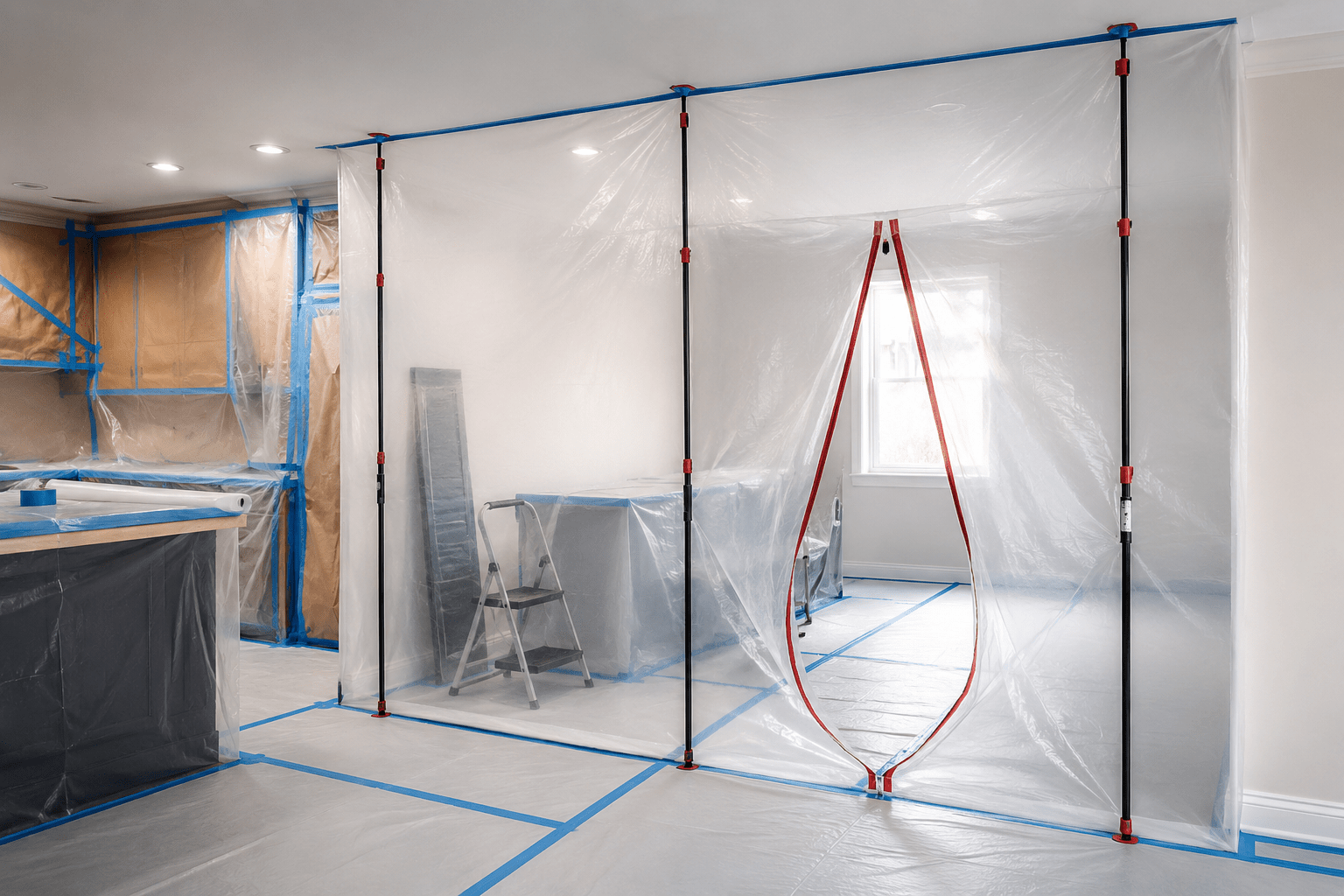
Containment reduces the chance of spreading dust and spores into unaffected areas. The setup depends on the size, location and risk of the project. Common materials include plastic sheeting, suitable tapes, zipper doors, floor protection, warning signs and waste bags.
Containment should be checked throughout the work. Doorways, penetrations and pressure changes can compromise an enclosure. Find sheeting, tapes, bags and PPE in our supplies and safety range.
3. HEPA-filtered air filtration
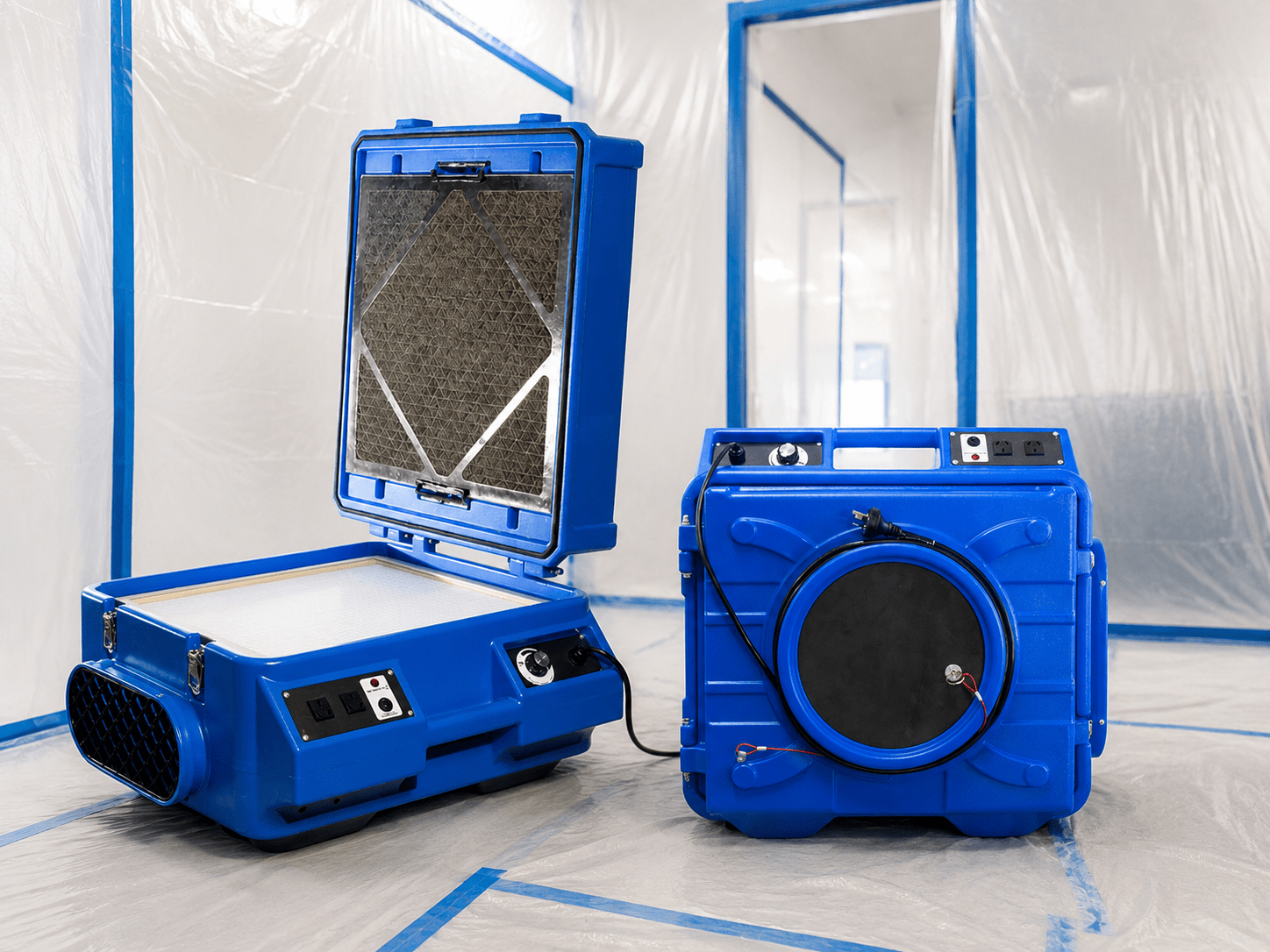
A suitable HEPA air scrubber can capture airborne particles generated during remediation. In a designed containment, the device may also support negative pressure. Correct airflow, filter condition, ducting and exhaust location all matter.
Do not assume every machine with a filter is suitable for mould work. Check the filtration specification, airflow under load, filter-change procedure and manufacturer instructions. Filters should be handled as contaminated material when the risk assessment requires it.
4. H-class or suitably rated HEPA vacuuming
WorkSafe Queensland identifies an H-class industrial vacuum with a HEPA filter as an engineering control for professional remediation work. A suitably rated vacuum supports detailed cleaning of surfaces and settled dust. Domestic vacuums can exhaust fine particles back into the room and are not a professional substitute.
Inspect seals, hoses, bags and filters before use. Also plan how the unit will be cleaned and decontaminated before it leaves the work zone.
5. Controlled removal and cleaning tools
The tool set may include hand tools for careful material removal, disposable brushes and cloths, low-pressure application equipment, scrapers, cutting tools and sealed waste containers. Select methods that minimise unnecessary dust.
Queensland Health advises against dry brushing mould from an area because it can release spores into the air. It also warns never to mix bleach with ammonia or vinegar.
If a cleaning or treatment chemical is used, follow its label and current Safety Data Sheet. Our Product Documents and Safety Data Sheets hub brings together official document sources and available product files.
6. Personal protective equipment
PPE is selected from the risk assessment, not from a universal shopping list. Depending on the work, this may include a correctly fitted P2 or higher respirator, gloves, eye protection, protective clothing and suitable footwear. Facial hair, fit, change schedules and decontamination procedures affect respiratory protection.
PPE is the last line of defence. It does not replace fixing the water source, isolating the area, using suitable extraction and controlling dust at its source.
7. Drying and verification equipment
After the source is repaired and contaminated material is addressed, the structure may still need controlled drying. Air movers and dehumidifiers should be positioned with containment and particle movement in mind. Continue to record moisture conditions until the agreed drying or remediation criteria are met.
Final checks may include a visual inspection, moisture verification, cleanliness review and any additional assessment specified by the remediation plan. Sampling, where justified, should be designed and interpreted by an appropriately qualified person.
A professional kit is a system
The best mould-remediation kit is not simply the longest equipment list. It is a compatible system that your team can inspect, maintain, decontaminate and use correctly. Start with the hazard, choose controls in order and document the outcome.
For help matching HEPA filtration, monitoring tools, vacuums, PPE or containment supplies, speak with Restoration Warehouse.
This guide is general information, not a site assessment or health recommendation. Follow applicable WHS duties, current standards, manufacturer instructions and advice from competent remediation and health professionals.
