
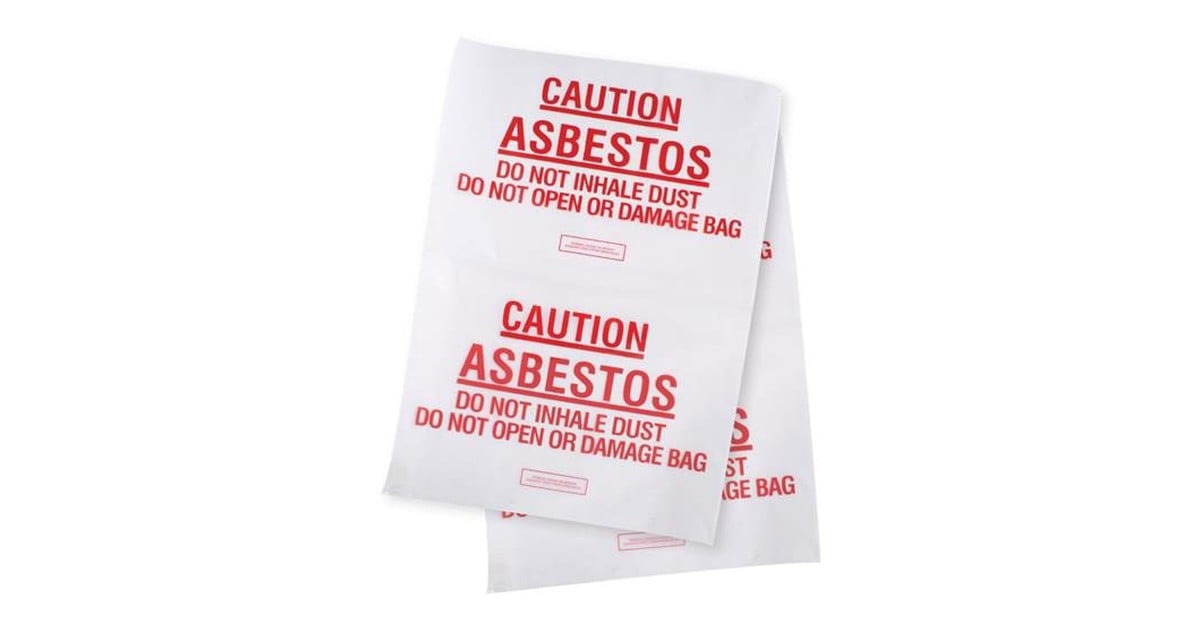
Asbestos bags look like the simplest thing on the van until one splits on a broken eave sheet, gets filled to the top and torn on the way to the ute, or turns out to be a thin rubbish bag with a warning sticker slapped on it. A heavy-duty rubbish bag and an asbestos waste bag are not the same product. Buy the wrong one and the waste you were trying to contain ends up back in the air, on the driveway or in the back of the vehicle.
This is a buying and use guide for Australian restoration, demolition, building and maintenance crews who come across asbestos-containing material (ACM) on the job, and for the licensed removalists they work with. It covers what an asbestos waste bag is meant to do, what the national code of practice expects from one, how asbestos bags differ from general heavy-duty bags, and what to check before you restock.
It is not a licence, an asbestos assessment or legal advice. Who can remove what, and how, is set by your state or territory WHS laws and your regulator. Read the current Safe Work Australia model Code of Practice: How to safely remove asbestos (and your state version), follow the removal control plan, and treat bags as one part of a regulated system.
Where asbestos bags fit on a restoration job
Water-damaged eaves and soffits, fire-affected fibre cement, old vinyl floor tiles, insulation debris after a storm — on older buildings a restoration strip-out can turn into an asbestos job before lunch.
The licence boundaries matter before the bag does. Friable asbestos can only be removed by a Class A licensed removalist. Non-friable asbestos over 10 m² needs a licensed removalist too (the ACT is stricter and requires a licence for any quantity of non-friable removal). If the job is over those lines, the bags you carry are for the licensed crew’s waste stream and your own contaminated PPE — not for doing their work.
Where crews legitimately handle asbestos waste — licensed removal, small non-friable jobs within the rules, or bagging contaminated PPE and drop sheets — the bag is the last barrier between the fibres and everyone downstream: your workers, the driver, the disposal site staff and the next trade on site.
What the code of practice expects from an asbestos waste bag
Safe Work Australia’s model Code of Practice: How to safely remove asbestos sets out the containment it expects for asbestos waste. In plain terms:
- New, heavy-duty polythene bags, 200 µm minimum thickness. Not reused bags, and not thinner general-purpose bags.
- No more than 1200 mm long and 900 mm wide. The size limit is there to prevent manual task injuries, not just to fit the skip.
- Controlled wetting of the waste to minimise dust during sealing or if a bag later ruptures.
- Twisted tightly, neck folded over and taped — the method the code calls goose-necking.
- No more than half full (depending on the weight of what is going in), with excess air gently pushed out in a way that does not release dust.
- Labelled with signage stating that the bag contains asbestos and that dust creation and inhalation should be avoided.
- Cleaned and double-bagged. The outside of each bag is cleaned of adhering dust before it leaves the removal area, then double-bagged outside the removal area immediately after decontamination.
The WHS Regulations add the legal end of it: asbestos waste must be contained and labelled in accordance with the GHS before it leaves the asbestos removal area, and disposed of as soon as practicable at a site authorised to accept asbestos waste. Contaminated disposable PPE must be sealed in a labelled container before it leaves the work area too.
Those are the numbers to buy against. Thinner, bigger or unlabelled is the wrong bag, however tough it feels.
Asbestos bags vs heavy-duty rubbish bags
The aisle and the search results mix two products that fail in very different ways.
Asbestos waste bags. 200 micron polythene, sized within the 1200 × 900 mm limit, printed with an asbestos hazard warning, single use. Built for wet, sharp, heavy debris such as fibre cement fragments, and for clear identification all the way to the disposal site.
Heavy-duty multi-purpose bags. Thick, tough and right for general strip-out waste, wet carpet underlay, packaging and site rubbish. Restoration Warehouse’s Ezy Consumables Heavy Duty Multi Purpose Bags are listed at 150 micron, in 1100 mm × 800 mm and 1400 mm × 800 mm. That is a good bag for non-asbestos waste on water, mould and fire jobs. It is not an asbestos waste bag: it is under the 200 µm minimum, the 1400 mm option is longer than the 1200 mm limit, and it carries no asbestos warning print.
Stock both, in separate tubs in the van, so nobody grabs whatever bag is nearest.
What to check before you buy asbestos bags
Ignore the packaging and read the listing against the code.
Thickness in microns. Look for 200 micron (200 µm) stated on the product. If the thickness is not on the label, treat it as unknown and do not use it for asbestos.
Size within the limit. 1200 × 900 mm is the largest bag the code describes. A bigger bag is not “more value” — it is harder to lift safely and easier to overfill.
Printed hazard warning. The bag should be clearly printed as asbestos waste. Printed bags save the sticker-and-marker step on site and stay identifiable through transport and tipping. Your state or disposal site may have specific marking requirements, so check them before the first load.
Material and construction. Heavy-duty LDPE with welded seams resists punctures from sharp edges better than a seam-folded general bag. Fibre cement breaks into sharp pieces; cheap bags fail at the corners first.
Single use. Asbestos bags are single-use packaging. Do not empty, reuse or repurpose them, and do not use them as general rubbish bags on the next job.
Pack size that suits your workload. Match the pack to how often you actually bag asbestos waste, and keep stock dry and out of the sun.
Options at Restoration Warehouse
Ezy Consumables Asbestos Waste Bags 200 Micron 1200 x 900mm Box of 40. Ezy Consumables Asbestos Waste Bags (SKU EZY-CON-ASB-40). Listed as heavy-duty 200 micron LDPE disposal bags for the containment, transport and disposal of asbestos waste. Size 1200 × 900 mm (approx. 48 × 36 inch), clear bag with a red printed asbestos hazard warning, welded seams and puncture-resistant construction. Single use, supplied as a box of 40. Listed applications include licensed asbestos removal works, demolition and strip-outs, roof sheeting and eaves removal, packaging asbestos cement fragments, containment of insulation debris, commercial maintenance shutdowns and transport to approved disposal facilities. The listing says the bags support compliant waste packaging procedures when used correctly — the procedure is still yours to follow. In stock at the time of writing; confirm availability on the page.
PPE that goes in the bag at the end of the shift. Disposable coveralls are a listed use for asbestos preparation work on Ezy Consumables Disposable Coveralls Type 5 & 6. For what Type 5 and Type 6 mean, see how to choose coveralls for restoration and site work. Respiratory protection for asbestos work is set by your asbestos assessment and the code — our P2 mask guide covers the basics of disposable respirators, not asbestos-specific RPE selection.
Encapsulants for licensed crews. Restoration Warehouse also stocks Fiberlock ABC Asbestos Binding Compound 18.9L, listed for encapsulating friable ACM and pre-removal fibre stabilisation in asbestos abatement projects, and the Fiberlock ABC Asbestos Binding Compound Spray Aerosol 237ml for spot encapsulation and small-scale asbestos remediation work. Friable asbestos is Class A licensed work — these are for the crews who hold that licence.
Browse the Bags & Waste Handling category for what is currently stocked. Do not assume a price or a feature that is not on the listing.
Bagging asbestos waste on site without creating the next exposure
Set up before you start. Have bags, tape, wetting spray and outer bags ready before any material comes off.
Wet first, then bag. Controlled wetting keeps dust down while you bag and seal. Do not hose it to a slurry; you want damp, not running water.
Half full, then stop. Fibre cement is heavy. A half-full bag is easier to lift, less likely to split, and leaves enough neck to goose-neck properly. Ease out excess air gently — never by squashing the bag against your body.
Goose-neck every bag. Twist the neck tight, fold it over and tape it down. Many crews use a cloth tape such as Ezy Consumables Black Cloth Tape for this; the code simply calls for adhesive tape, so follow your procedure.
Clean the outside, then double-bag. Wipe the outer surface of each sealed bag before it leaves the removal area, then place it in a second bag outside the area once decontamination is done.
Bag the PPE and the plastic too. Contaminated disposable coveralls, wipes and drop sheets are asbestos waste. Seal and label them with the rest; do not put them in the general skip. If your procedure calls for wrapping larger sheets in 200 µm plastic, our builders plastic guide covers what to look for in heavy-duty film.
Storage, transport and disposal
Once bagged, asbestos waste should be stored securely so untrained people cannot get to it, and disposed of as soon as practicable at a site authorised to accept asbestos waste. Not every landfill takes it, so ring the disposal site before you load the vehicle to confirm hours, fees and what they need from you.
Transport and tracking rules are set state by state. In Queensland, for example, asbestos is regulated waste and commercial operators carry waste tracking obligations when they transport it. Check your state’s asbestos and environment regulator before the first load, not after.
Stock asbestos bags with the rest of the kit
Asbestos bags fail at the worst possible moment — halfway through an eaves strip, on the way to the vehicle, or at the tip. Treat proper 200 micron, printed, correctly sized asbestos bags as van stock next to coveralls, tape and heavy-duty film, and keep them separate from your general rubbish bags.
Restoration Warehouse stocks Ezy Consumables Asbestos Waste Bags 200 Micron 1200 x 900mm in boxes of 40. Browse the asbestos waste bags listing or the Bags & Waste Handling range.
For current availability or a site order, call 07 3568 4925, email sales@restorationwarehouse.com.au, or visit restorationwarehouse.com.au.
