
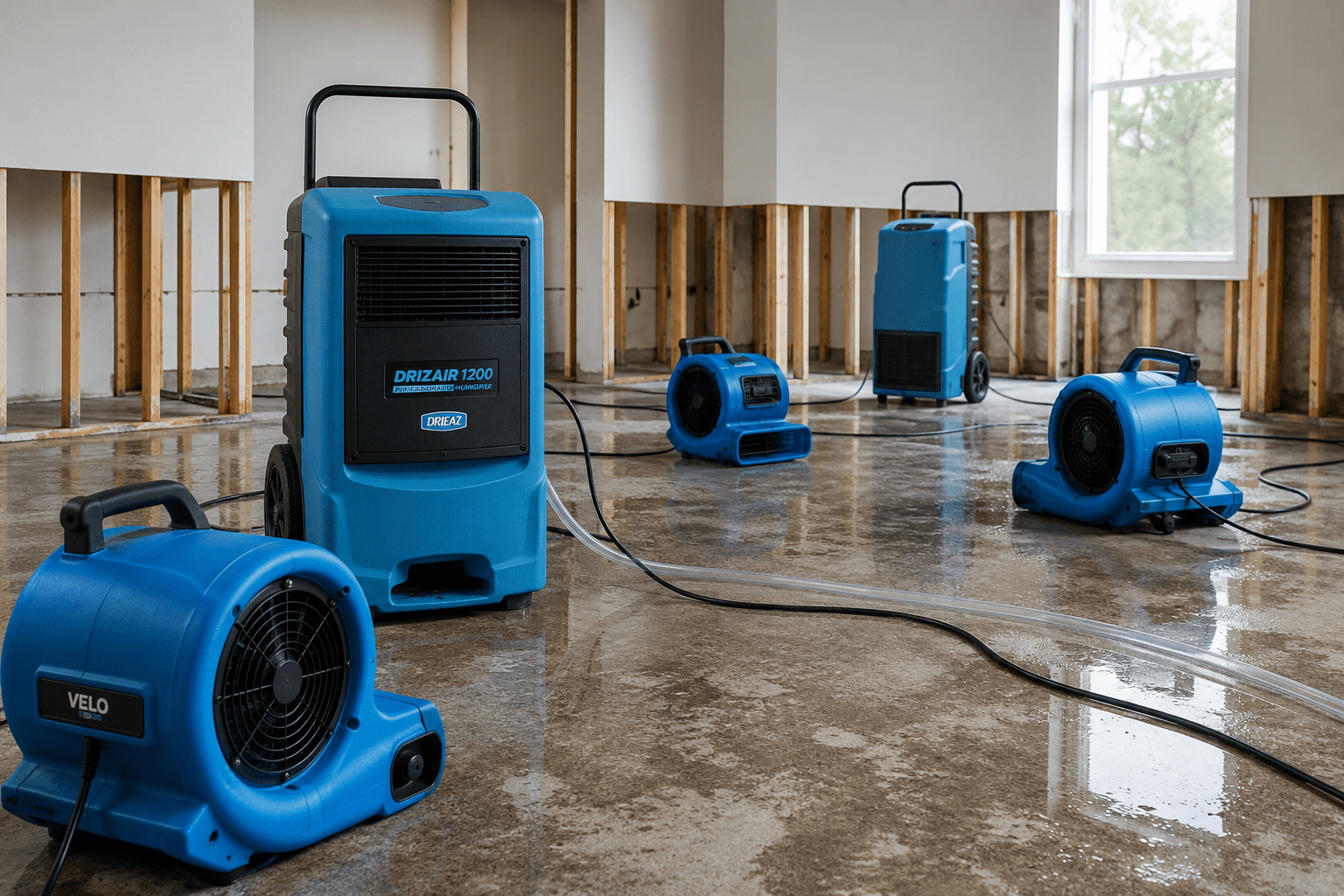
Fast water removal can limit secondary damage, shorten the drying process and make a restoration project easier to control. However, choosing water extraction equipment is not simply a matter of buying the machine with the largest tank. The right setup depends on the volume and source of the water, the materials affected, access to the site, available power and how the extracted water will be discharged.
This guide explains the main types of professional water extraction equipment, what each one does and how extraction fits into a complete structural-drying workflow.
Safety before extraction
Do not enter a flood-damaged building until the relevant authority, building owner or qualified professional confirms it is safe. Floodwater may involve electricity, unstable structures, sewage, chemicals, sharp objects, asbestos or other hazardous materials. Isolate electrical hazards correctly and use suitable personal protective equipment. Large, contaminated or technically complex losses should be handled by trained restoration professionals.
What water extraction equipment actually does
Extraction equipment removes liquid water from a building and its contents. This is different from dehumidification, which removes water vapour from the air, and air movement, which encourages moisture at a material’s surface to evaporate. A professional drying plan normally uses all three processes in the correct order.
- Bulk water removal deals with standing water using pumps or high-capacity extraction equipment.
- Detailed extraction removes remaining water from carpet, underlay, hard floors, edges and accessible cavities.
- Air movement and dehumidification remove moisture that remains within materials and the indoor environment.
- Moisture measurement confirms whether the drying system is working and when the project has reached its documented drying goals.
Top water extraction equipment by job type
1. Submersible pumps for significant standing water
A suitable submersible pump can remove large volumes of standing water before detailed extraction begins. Pumps are particularly useful where water is deep enough for the unit to operate correctly and there is a lawful, safe discharge location.
Check the pump’s water-quality limitations, minimum operating depth, flow rate, head height, hose diameter, electrical requirements and ability to tolerate solids. A clean-water pump should not be assumed suitable for sewage, silt or chemically contaminated water.
2. Flood extractors for rapid recovery and pump-out
Purpose-built flood extractors combine strong vacuum recovery with a larger recovery tank or automatic pump-out capability. They are designed for restoration work where water must be recovered continuously from carpet, flooring or affected rooms without repeatedly stopping to empty a small tank.
Featured flood extraction option
Polivac Mytee Flood Hog Extractor — a live catalogue option with a 45-litre tank, dual LX vacuum motors and pump-out configuration. Review the product specifications and confirm suitability for the water category, surface and operating environment before use.
3. Portable extractors for controlled, detailed work
Portable spray-extraction machines are useful for controlled extraction from carpet and upholstery, detailed cleaning and smaller restoration areas. Tank capacity, vacuum performance, hose length, solution pressure, heating, portability and access all influence the best choice.
A portable carpet extractor is not automatically a substitute for a high-volume flood extractor. On a large loss, a smaller machine can create unnecessary downtime through frequent emptying. On a confined or upper-level site, however, portability may matter more than maximum capacity.
4. Extraction wands, hoses and floor tools
The recovery machine is only one part of the system. The correct wand or floor tool improves surface contact and helps recover water consistently. Hose diameter, hose length, air leaks, blocked filters and poorly sealed connections can all reduce effective airflow at the tool.
Choose tools for the surface being treated and inspect cuffs, connectors, hoses and seals before each project. Carpet, upholstery, hard flooring and narrow edges may require different tools and techniques.
5. HEPA vacuums and air scrubbers for contamination control
Water extraction can disturb dust, damaged materials and contaminants. HEPA-filtered equipment and air scrubbers may form part of the containment and cleaning plan, particularly during demolition or when fine particulate must be controlled. These machines do not remove standing water, so they complement rather than replace extraction equipment.
Extraction is only the first stage of structural drying
Removing visible water does not mean the building is dry. Timber, plasterboard, concrete, insulation, carpet systems and concealed cavities can retain moisture after the floor appears dry. The next stage is a controlled combination of airflow, dehumidification, temperature management and moisture monitoring.
Air movers
Air movers increase airflow across wet surfaces and help moisture evaporate. Placement should suit the room, affected materials and drying plan—not simply fill the area with fans.
Dehumidifiers
Dehumidifiers remove water vapour from the air and help maintain conditions that support drying. Capacity and performance must match the affected volume, moisture load and operating conditions.
How to choose the right extraction setup
- Identify the water source and contamination risk. Clean supply water, stormwater and sewage-affected water require different controls, equipment handling and disposal procedures.
- Measure the scale of the loss. Record the affected rooms, water depth, floor area and materials. A major commercial loss needs a different system from a small carpet spill.
- Check access and power. Consider stairs, doorways, lift access, hose runs, available circuits, generator safety and whether the equipment can be moved and operated safely.
- Plan discharge before starting. Confirm where recovered water can legally and safely go. Do not discharge contaminated water into an unsuitable drain or onto neighbouring property.
- Match tools to materials. Carpet, underlay, timber, concrete and cavities do not all respond to the same tool or extraction technique.
- Plan the drying stage. Select air movers, dehumidifiers and monitoring instruments as part of the initial setup rather than treating them as an afterthought.
A practical water-damage workflow
| Stage | Primary objective | Typical equipment |
|---|---|---|
| Assessment | Identify hazards, affected materials and moisture spread | Moisture meters, hygrometers, thermal imaging where appropriate |
| Bulk removal | Remove significant standing water | Suitable pumps and high-capacity extraction systems |
| Detailed extraction | Recover water from flooring, carpet systems, edges and contents | Flood extractor, portable extractor, wands, floor tools and hoses |
| Controlled drying | Move evaporated moisture out of materials and air | Air movers, dehumidifiers and controlled ventilation where suitable |
| Verification | Track progress against documented drying goals | Moisture meters, hygrometers and daily records |
Common water extraction mistakes
- Starting before hazards are controlled. Electricity, structural damage and contaminated water can make a site unsafe.
- Using undersized equipment. Small tanks and low recovery rates can create delays on larger losses.
- Ignoring discharge requirements. Pumping water quickly is not useful if there is no compliant disposal plan.
- Stopping when surfaces look dry. Moisture may remain inside materials or concealed assemblies.
- Failing to document readings. Without baseline and progress measurements, it is difficult to verify that drying conditions are improving.
- Neglecting cleaning and maintenance. Recovery tanks, hoses, tools and filters must be cleaned and maintained according to the equipment instructions and contamination level.
Frequently asked questions
What is the best machine for extracting floodwater?
There is no single best machine for every loss. Deep standing water may require a suitable pump, while carpet and detailed surface recovery may need a flood extractor or portable extraction machine. Water contamination, volume, access, power and discharge requirements must all be considered.
Can a carpet cleaner be used for floodwater extraction?
Some professional extraction machines can recover water from carpet and upholstery, but tank size, vacuum performance, pump-out capability and contamination suitability matter. A standard carpet cleaner may be inefficient or inappropriate for a large or contaminated loss.
Do I still need a dehumidifier after extracting the water?
Usually, yes. Extraction removes liquid water, but affected materials and indoor air can still contain significant moisture. Dehumidifiers and air movers are commonly used to continue the controlled drying process.
How do I know when the building is dry?
Use appropriate moisture meters and environmental readings to compare affected materials with documented drying goals or suitable unaffected reference areas. Appearance and touch alone are not reliable verification methods.
Can I extract sewage-contaminated water myself?
Sewage-affected water can present serious biological and chemical hazards. It requires suitable training, PPE, containment, equipment, cleaning and waste-disposal procedures. Engage a qualified restoration professional when contamination or site safety is uncertain.
Build a complete extraction and drying system
The most effective equipment package is the one matched to the loss. Begin with a clear assessment, remove standing water efficiently, extract affected surfaces thoroughly and then manage airflow, dehumidification and moisture verification. Restoration Warehouse supplies professional extraction, drying and monitoring equipment for contractors, cleaners, facility teams and restoration businesses across Australia.
This article provides general product-selection information and is not a substitute for a site-specific risk assessment, professional restoration advice, electrical advice or local regulatory requirements. Follow emergency-service directions, equipment manuals, safety data sheets and applicable Australian requirements.
