
Professional restoration tools are built for repeatable work in demanding conditions. They help technicians extract, dry, clean, filter and measure with more control than general-purpose alternatives. The difference is not just power. It is the complete working system: performance, safety features, accessories, maintenance, documentation and support.
In Australia, professional water-damage practice now has an Australian-adopted reference in the AS-IICRC S500 Standard for Professional Water Damage Restoration (2025). Its scope includes equipment, instrumentation, inspections, drying technology and structural restoration.
Repeatable performance matters
A restoration business needs equipment that performs predictably from one site to the next. Published specifications, suitable controls and compatible accessories make it easier to plan the job. A technician can then adjust the setup using measurements instead of guesswork.
Consistency also improves training. When a team understands how a machine behaves, staff can set it up correctly, recognise problems and record meaningful results.
Professional tools are designed around the task
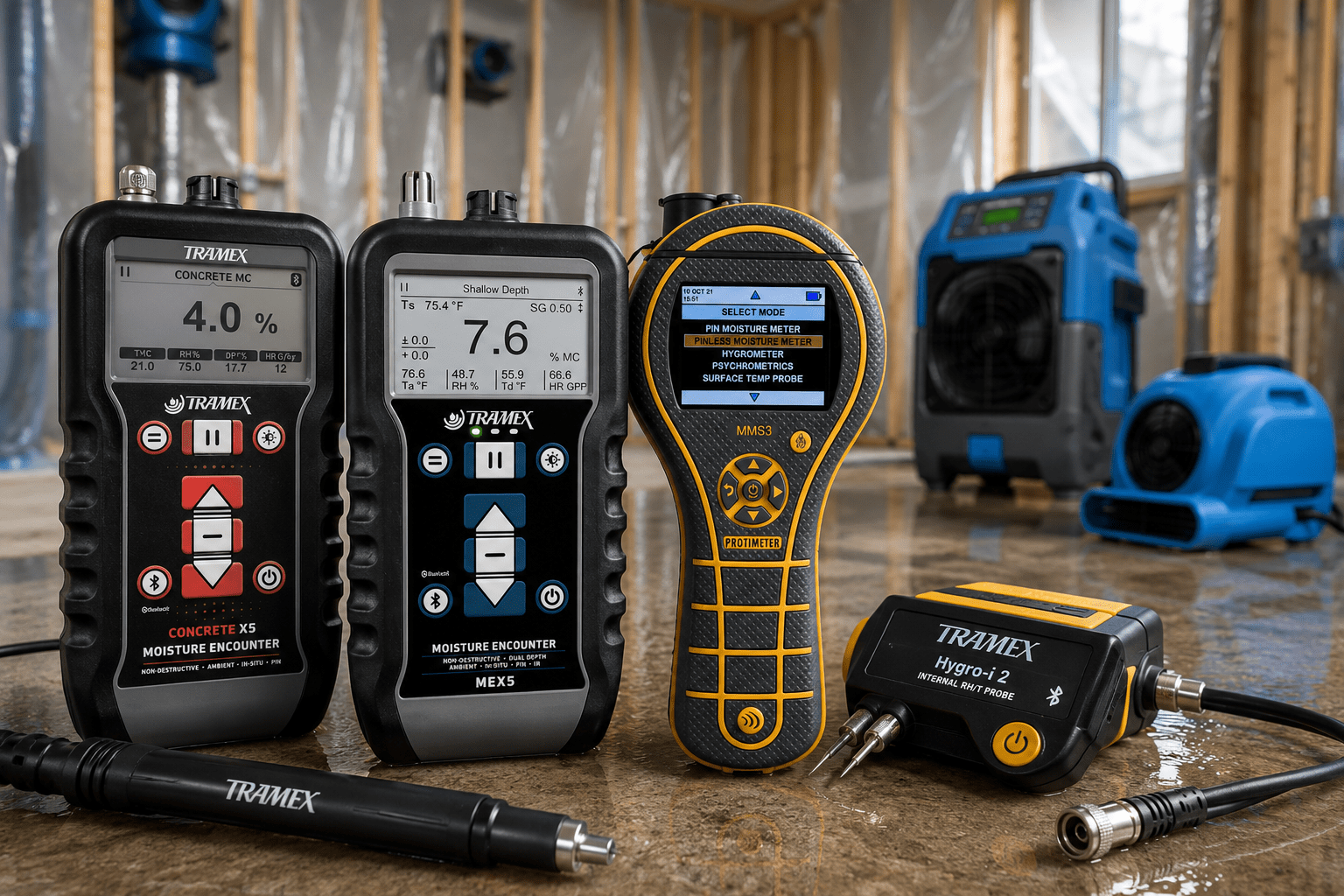
A general fan moves air. A professional air mover is selected for useful airflow, placement options, safe daisy-chaining where approved and hours of operation. A general moisture detector may find a suspect area. A professional meter provides modes, probes or material references that support more detailed investigation.
The same principle applies across:
- water extraction and recovery tools;
- air movers and dehumidifiers;
- HEPA filtration and dust control;
- moisture, temperature and humidity instruments;
- carpet and hard-floor cleaning machines; and
- sprayers, wands, hoses and specialist hand tools.
Durability reduces expensive interruptions
Purchase price is only one part of cost. A cheaper machine that fails during an overnight drying job can cost labour, travel, hire fees and customer confidence. Professional equipment is usually evaluated for duty cycle, transport, cleanability and field use.
Durability still depends on maintenance. Filters, leads, plugs, hoses, seals, bearings, pumps and coils need routine inspection. Build cleaning and pre-dispatch checks into the workflow.
Serviceability protects the investment
Parts availability and repair knowledge can extend useful life. Before buying, ask whether filters, hoses, switches, wheels, pumps or other wear components are available. Also ask how warranty and technical support are handled.
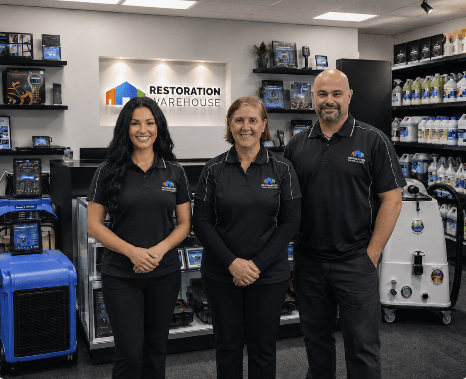
Restoration Warehouse carries parts and accessories and provides equipment service and support across key professional product families.
Better instruments support better records
Professional restorers need to explain why equipment was installed, moved or removed. Moisture readings and environmental measurements provide evidence of progress. They can also reveal when the current strategy needs to change.
Use instruments within their limitations. Check calibration recommendations, choose the appropriate mode or probe and take readings from useful reference points. A colourful screen is not a substitute for correct interpretation.
Safety information is easier to find
Professional manufacturers generally provide operating manuals, technical data and maintenance instructions. Chemical suppliers should provide current Safety Data Sheets for hazardous products. Those documents help a business train staff, maintain equipment and complete risk assessments.
Visit our Product Documents and Safety Data Sheets hub for official sources and available documents.
Whole-of-life value beats the lowest price
When comparing tools, include the costs that appear after checkout:
- expected working life and duty cycle;
- consumables and replacement filters;
- parts, repairs and warranty support;
- training and ease of use;
- transport, storage and cleaning; and
- downtime if the tool is unavailable.
Choose a system that fits your work
The best professional tool is the one that fits the job, the team and the rest of the equipment package. Check power requirements, hose sizes, ducting, filters, data needs and vehicle space before committing.
Explore our professional restoration and cleaning equipment, or ask the Restoration Warehouse team to help compare options.
This article provides general information only. Use equipment in accordance with the manufacturer’s instructions, applicable standards and workplace health and safety requirements.
